Why Your Cycling Jersey Pockets Never Sit Right (and What Actually Fixes It)
Quick Answer: Pocket sagging and bouncing usually comes down to two fixable factors — uneven weight distribution across the three rear pockets, and a jersey that’s slightly too large in the torso, which allows the loaded pockets to swing rather than stay anchored against your lower back; loading heavier items in the center pocket and sizing the jersey snugly enough to stay put resolves most of the discomfort.
The pockets themselves are rarely the actual design flaw — it’s usually how they’re loaded and how well the jersey fits that determines whether they work well or become a distraction on a ride.

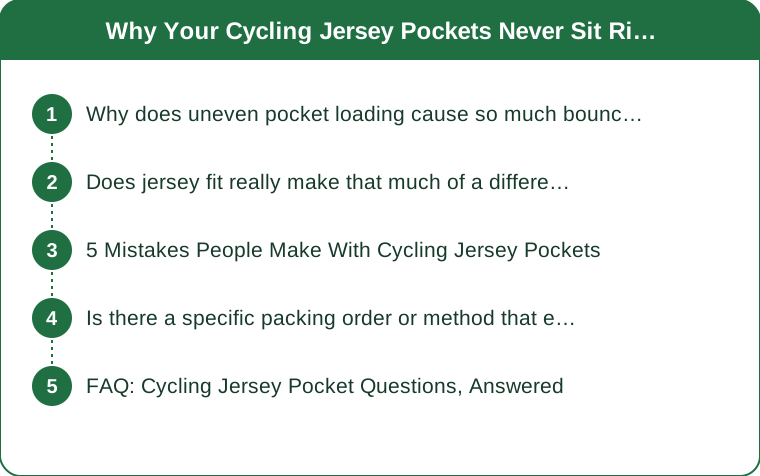
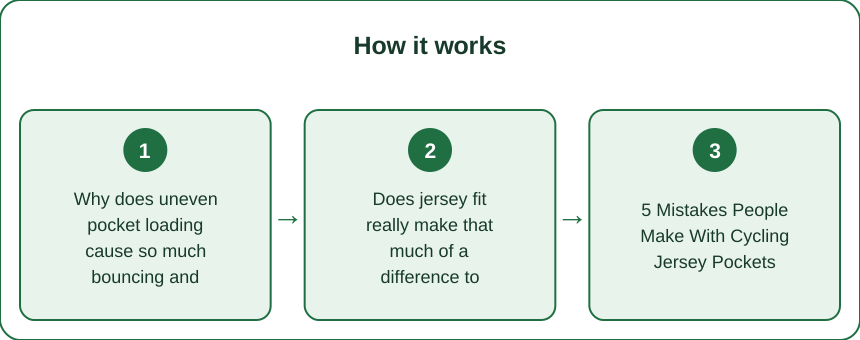
Why does uneven pocket loading cause so much bouncing and discomfort?
Placing a heavy single item (like a full water bottle or a large phone) in one side pocket while leaving the others empty creates an asymmetric weight distribution that swings and bounces with pedaling motion, especially out of the saddle or on rougher terrain.
Distributing weight evenly across all three pockets — heavier, denser items in the center pocket where movement is most stabilized against the back, lighter items in the side pockets — significantly reduces this bouncing effect.
Does jersey fit really make that much of a difference to pocket performance?
Yes — a jersey that’s even slightly too loose in the torso allows the entire pocket panel to shift and sag once loaded, since there’s extra fabric for the weight to pull against, while a snugger, race-fit or club-fit jersey keeps the pocket panel anchored closer to the body throughout the ride.
This is part of why cycling brands specifically recommend sizing jerseys more snugly than casual athletic wear — a jersey that fits well unloaded can still perform poorly once the pockets are packed if it was sized with extra room.

5 Mistakes People Make With Cycling Jersey Pockets
Mistake 1: Loading all the weight into one side pocket instead of distributing it evenly across all three.
Mistake 2: Sizing the jersey looser than the recommended fit, assuming it’ll be more comfortable, when it actually undermines pocket stability.
Mistake 3: Overpacking pockets beyond what the jersey’s elastic and stitching are designed to hold, which stresses the seams over time.
Mistake 4: Storing sharp or hard-edged items (keys, multitools) without a soft pouch, risking discomfort and even fabric wear against the lower back.
Mistake 5: Not testing pocket load and fit on a short ride before relying on it for a longer ride where discomfort becomes much more noticeable.
Is there a specific packing order or method that experienced riders actually use?
Many experienced riders pack denser, less flexible items (a multitool, a spare tube) in the center pocket close to the back, softer or bulkier items (a packable jacket) in one side pocket, and food or a phone in the remaining side pocket — this order keeps the load balanced and the hardest items positioned where they’re least likely to shift or dig in.
Using a small zippered pouch inside the center pocket for smaller loose items (like keys or cash) also prevents them from working their way to an uncomfortable position mid-ride, which is a common minor annoyance riders don’t address until it’s already happened repeatedly.
FAQ: Cycling Jersey Pocket Questions, Answered
Does pocket bouncing indicate the jersey is defective?
Not usually — it’s more often a loading or fit issue than a manufacturing defect, though a jersey with notably weak pocket elastic could contribute to the problem.
Should heavier riders size up specifically to accommodate more pocket capacity?
Sizing should still prioritize a snug torso fit for pocket stability; capacity is more about pocket depth and construction than overall jersey size.
Is there a weight limit for what jersey pockets can safely carry?
Most jerseys don’t specify an exact weight limit, but overloading pockets beyond a comfortable, evenly distributed load increases both discomfort and long-term stitching wear.
TL;DR:
- Uneven pocket loading, not pocket design, is the main cause of bouncing and discomfort
- A snugger jersey fit keeps loaded pockets anchored against the back far better than a looser fit
- Distributing weight evenly across all three pockets, with denser items centered, minimizes movement
- Testing pocket load and fit on a shorter ride before a long one helps catch issues early
A well-fitted jersey with thoughtfully loaded pockets solves most of what gets blamed on ‘bad jersey design.’
Keep Reading
This article is for general informational and styling purposes only. Fit, sizing, and product availability may vary.