What Changes in Your Cycling Kit When Sunset Moves Before Your Ride
Quick Answer: When sunset moves earlier than your ride finish, three things change: visibility becomes a kit requirement rather than a preference, the temperature drop over a single ride gets large enough to need a packable layer, and your extremities cool much faster than your core. Add a rear light with a daytime flash mode, a packable gilet, and full-finger gloves before you need them, not after.
There is one specific evening where you leave at the usual time, ride the usual loop, and finish in genuine dusk.
Late August does this suddenly. Sunset moves back by more than a minute a day through this stretch, and a loop that has been comfortably finishing in daylight all summer stops doing so within a fortnight.
Three parts of your kit need to change, and it is worth doing all three at once.
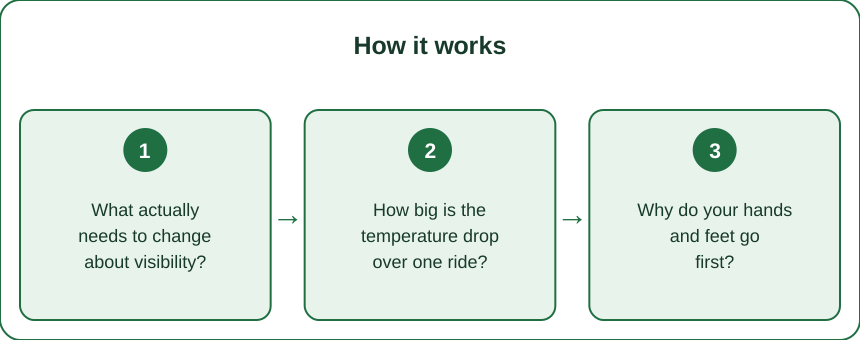
What actually needs to change about visibility?
More than most riders assume, and the important part is not the front light.
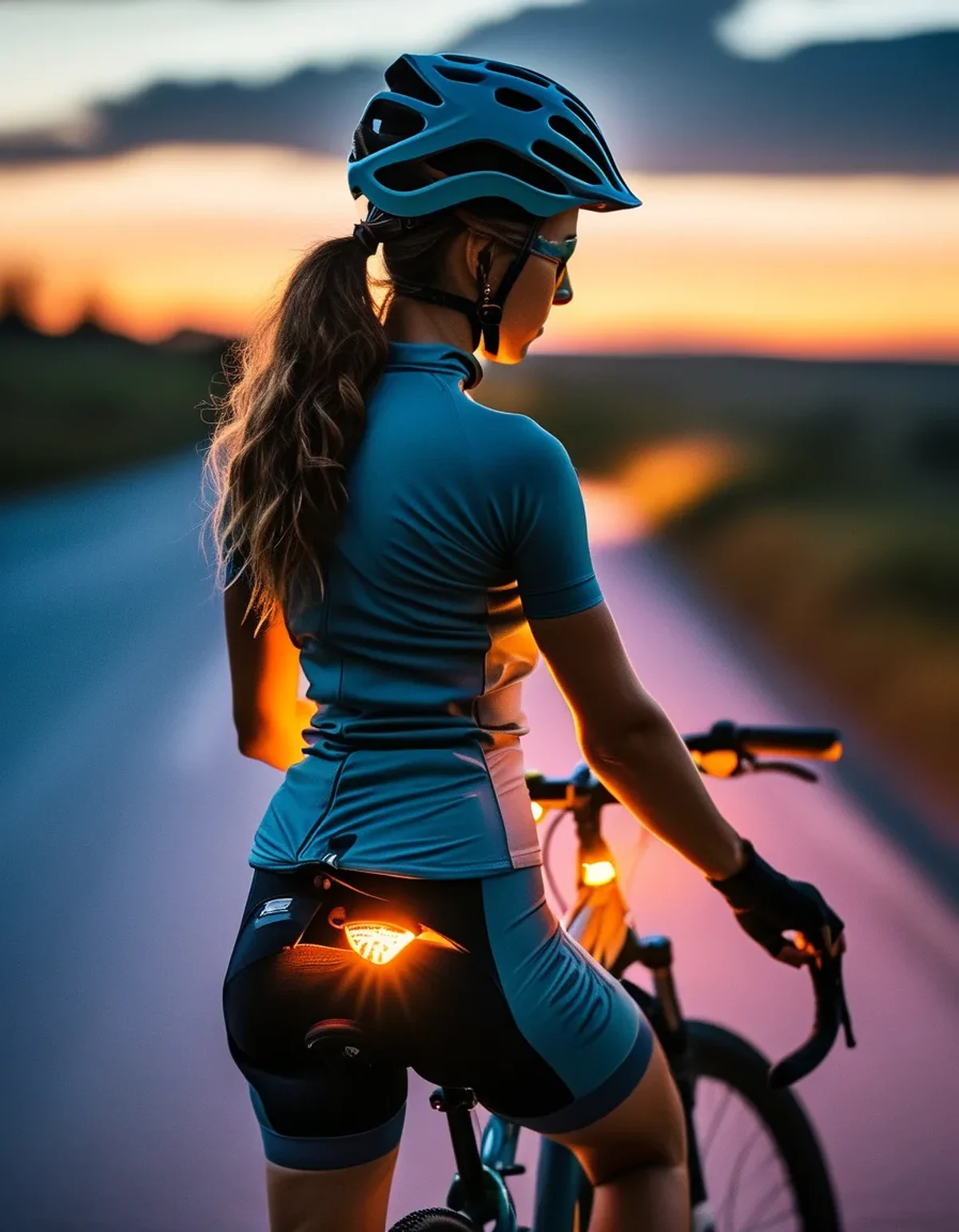
Rear visibility is the priority. The majority of collisions involving a car and a cyclist on a road come from behind or from a junction, and the rear light is what addresses both. A front light lets you see; a rear light lets you be seen, and in dusk the second is far more urgent.
Get a light with a daytime flash mode. Dusk is the worst light condition of the day for being seen — worse than full dark, because in full dark a light is the only thing on the road, while in dusk it competes with residual sky brightness, headlights, and street lighting. A high-output flashing mode designed for daytime use is specifically built for this condition.
Two rear lights is not excessive. One on the seatpost, one on the seat stay or the back of a saddlebag. Redundancy matters when one battery dies mid-ride, and the vertical separation makes you easier to judge distance against.
Position matters as much as output. A rear light angled slightly downward at the road, or obscured by a saddlebag, is doing a fraction of its job. Check it from ten metres behind the bike, at the height of a car driver’s eye.
Reflective placement beats reflective quantity. Reflective material on moving parts — ankles, shoes, cranks — is dramatically more noticeable than the same area on a static jersey back, because motion is what human vision detects first. Ankle bands are cheap and disproportionately effective.
Yellow-green out-performs white in low light. The eye is most sensitive to that part of the spectrum in dim conditions. If you are buying a new gilet, that is the colour to buy.
How big is the temperature drop over one ride?
Bigger than the forecast suggests, because the forecast does not account for what happens after sunset or for the wind you are generating.
On a clear late-summer evening, air temperature commonly drops 4 to 8°C in the two hours around and after sunset, and it drops fastest in the first hour after the sun goes down. Clear skies make this worse, not better — cloud cover holds heat in.
On top of that you are riding at speed, so wind chill applies. At 25 km/h, a 15°C evening feels closer to 11 or 12°C on exposed skin, and considerably colder if you are damp with sweat from the effort earlier in the ride.
The compounding problem is the sequence. You climb, you sweat, then you descend into air that is now several degrees cooler than when you set out, with wet fabric against your skin. That is the situation that turns a pleasant ride into a genuinely cold one, and it is entirely avoidable.
The single most useful item is a packable gilet. A windproof front, mesh or light fabric back, packs to the size of a fist, lives in a jersey pocket all autumn. It addresses the exact failure mode — wind on a damp chest on a descent — and weighs almost nothing.
Arm warmers are the second item. More versatile than a long-sleeve jersey because they come off in thirty seconds without stopping.
A base layer is the third. A light merino or synthetic base moves sweat off the skin, which is what actually keeps you warm on the descent. Riding a jersey directly against the skin is fine in July and a mistake in September.
Why do your hands and feet go first?
Because your body is doing exactly what it should, at your expense.
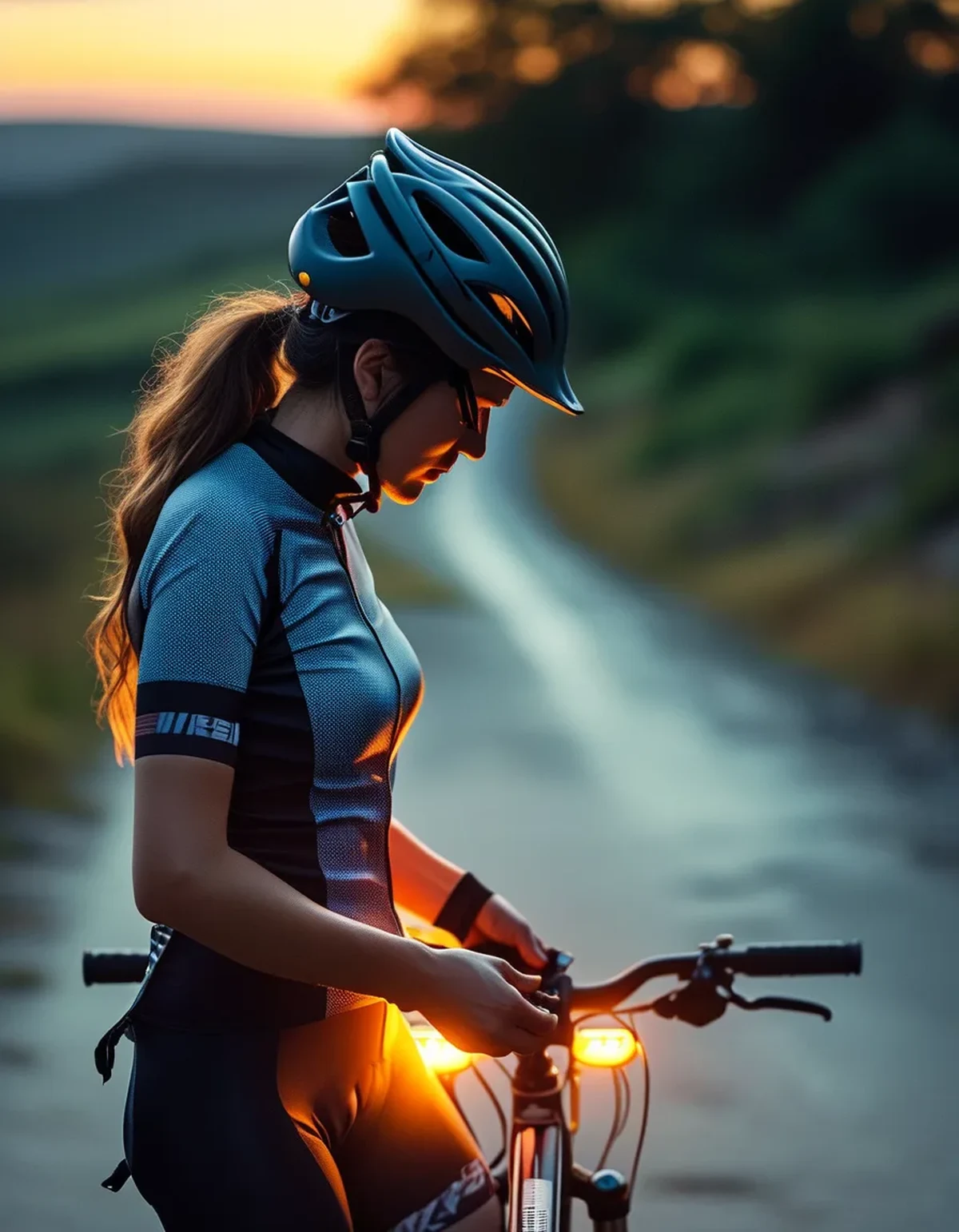
In cooling conditions, peripheral vasoconstriction reduces blood flow to the extremities to protect core temperature. Hands and feet cool first, and on a bike two things make it worse: your hands are stationary and out in front of you in the airstream, and your feet are in shoes designed with maximum ventilation for July.
The consequences are practical rather than merely uncomfortable. Cold hands lose fine motor control, which affects braking modulation and gear shifting — both of which you want working properly on a dusk descent.
Full-finger gloves are the first purchase, and lighter than you think is right. A thin full-finger glove covers a much wider temperature range than a thick winter one and does not compromise lever feel.
Toe covers, not overshoes, to start. A pair of neoprene toe covers costs very little, packs flat, and addresses the specific problem — cold air entering the vents at the front of the shoe. Full overshoes are a deep-autumn item.
A thin headband or ear cover under the helmet matters more than most people expect, because the helmet is a ventilation device and the ears are exposed and thin.
Do not size up your socks and add thickness inside existing shoes. Compressing the foot reduces circulation and makes cold feet worse, not better. If you need more insulation, it goes on the outside of the shoe.
What Nobody Tells You About the Autumn Transition
A few things that come up only once you have ridden through a couple of these.
Your usual route may not be a night route. A road that is fine in daylight can be genuinely poor in the dark — unlit, poor surface, fast traffic, no shoulder. It is worth having a specifically chosen autumn evening loop rather than defaulting to the summer one after dark.
Tyre pressure should come down slightly. Cooler roads and damp surfaces mean less grip, and a few PSI lower improves both grip and comfort on a surface that is starting to collect debris and moisture.
Debris season begins. Late summer and autumn bring more grit, more agricultural mud, and eventually wet leaves. Puncture rates rise noticeably. This is the point in the year to check tyre wear and to actually carry a spare tube you have checked.
Glasses need a clear or low-light lens. Riding dusk in dark tinted lenses is genuinely dangerous, and taking glasses off entirely leaves your eyes exposed to grit and wind. A clear or yellow lens is the correct answer.
Your kit gets damp and stays damp. Evening air with a high relative humidity means kit that does not dry overnight the way it did in July. Two of everything you use most, or a drying rack somewhere warm.
Batteries deplete faster in the cold. A light that gives you three hours in summer may give you noticeably less on a cold October evening. Charge before every ride rather than when the indicator warns you.
FAQ: Autumn Evening Cycling Questions, Answered
How bright does a rear light actually need to be?
For dusk and lit urban roads, something in the range of 20 to 50 lumens on flash is plenty and gives good battery life. For unlit rural roads, more output helps, but a steady mode alongside a flash is worth having — flashing alone can make it hard for a driver to judge your distance and speed.
Is a gilet really better than just a light jacket?
For this specific transition, yes. The gilet’s advantage is that it blocks wind on the chest while letting the back breathe, so you can leave it on through a climb without overheating. A full jacket usually has to come on and off, which means it ends up in the pocket exactly when you need it.
Should I change anything about hydration now that it is cooler?
Yes, and it is the most commonly missed adjustment. Thirst response is blunted in cooler air, so people drink noticeably less while sweat losses stay significant — particularly under a wind layer. Drink on a schedule rather than by thirst on cool rides.
TL;DR:
- Rear visibility matters more than front lighting at dusk; two rear lights and reflective ankles beat one bright beam
- Air temperature drops 4 to 8°C around sunset, and wind chill on a damp chest does the rest
- A packable gilet, arm warmers, and a light base layer cover the whole transition
- Hands and feet cool first and cost you brake feel — full-finger gloves and toe covers, not thicker socks
- Drop tyre pressure slightly, switch to a clear lens, and charge lights before every ride
The kit changes are small, cheap, and all packable. The mistake is making them one at a time, each after the ride where you needed them.
Keep Reading
This article is for general informational and styling purposes only. Fit, sizing, and product availability may vary.