Why Your Cycling Jersey Fits Differently on the Bike Than It Does Standing Up
Quick Answer: Cycling jerseys are cut for a riding position, not a standing one - a dropped rear hem, forward-rotated sleeves, a shorter front, and a curved back are all designed to sit correctly when your torso is bent forward and your arms are reaching. That is why the same jersey looks wrong in a changing room and correct on the bike. Judge fit by getting into a riding position with your hands on an imaginary bar, not by standing straight in front of a mirror.
You hold it up and it looks like a badly cut top. Short at the front, oddly long at the back, sleeves that seem to point forward.
Then you get on the bike and everything lines up, which is the entire point.
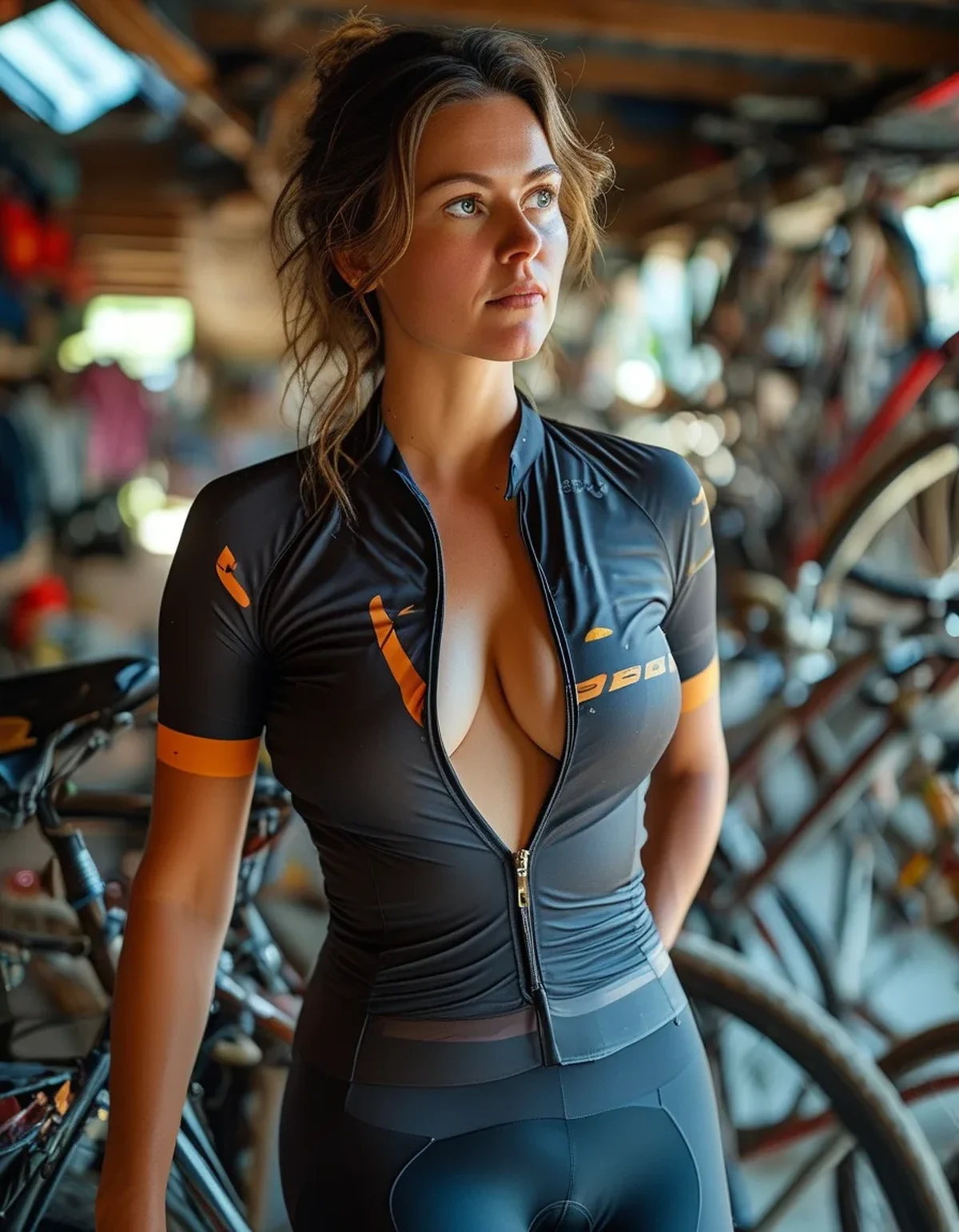
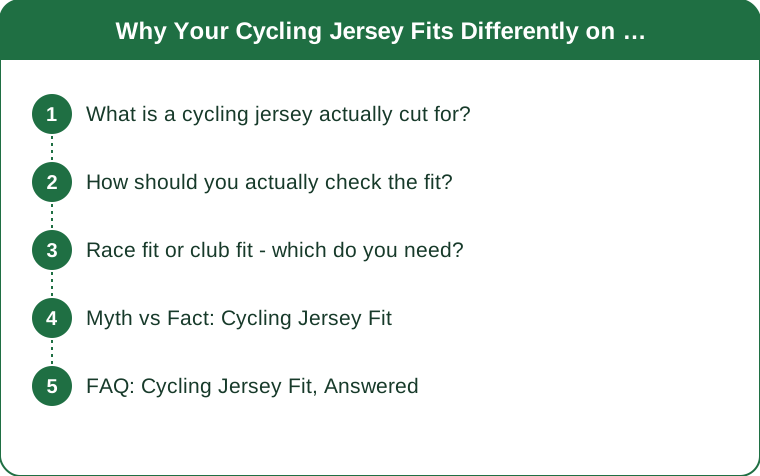
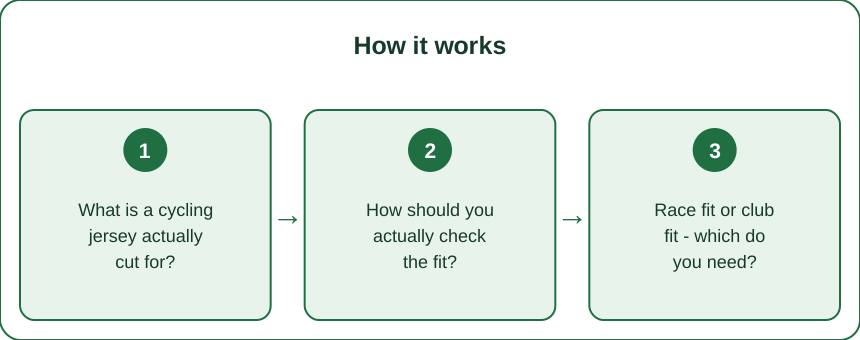
What is a cycling jersey actually cut for?
A forward-flexed torso. On a road bike your hips are rotated forward and your spine is bent, which lengthens the distance across your back and shortens it across your stomach. A jersey drafted for that position has a longer back and a shorter front by design.
Arms reaching forward and slightly down. The sleeves are set forward on the body rather than hanging straight, so that on the bike they sit smooth rather than pulling across the shoulder. Standing up, that same construction makes the sleeves look like they are aiming forward - because they are.
A dropped rear hem for coverage. As you bend forward, the back rides up. The extra length at the rear compensates so your lower back stays covered on the bike rather than exposed to sun, wind, and road spray.
Loaded rear pockets. Jersey pockets are designed to carry weight against the lower back in a bent position. Standing up, that same pocket panel sags and pulls the whole jersey down, which is part of why it hangs strangely off the bike.
Aerodynamics on close-fitting cuts. Race-fit jerseys minimise loose fabric because flapping material costs meaningful energy at speed. That fit is uncomfortable-looking standing and correct at 30 km/h.
All of which means the mirror test is misleading. A jersey that looks perfect standing up is often a jersey cut like a casual t-shirt, and it will ride up at the back the moment you get into position.
How should you actually check the fit?
Get into a riding position in the changing room. Bend forward at the hips, reach your hands out and down as though on the hoods, and hold it. This takes five seconds and tells you more than any amount of standing.
Check the rear hem in that position. It should cover your lower back with a little to spare. If it only just covers when you are stationary and dry, it will not once you are moving and the fabric has stretched slightly.
Check the front for bunching. A little slack at the stomach when standing should disappear when you bend. If it still bunches in the riding position, the jersey is too long at the front for you.
Check the shoulders and armholes while reaching. Raise and extend your arms as if reaching the drops. There should be no pulling across the upper back and no fabric binding at the armpit.
Check the collar in the bent position, not upright. A collar that sits comfortably standing can press on your throat once your head is up and your torso is down.
And load the pockets before deciding. Put a phone and a small pump or your keys in the back pockets. A jersey that fits empty and sags with 400 grams in it will sag on every ride you actually take.
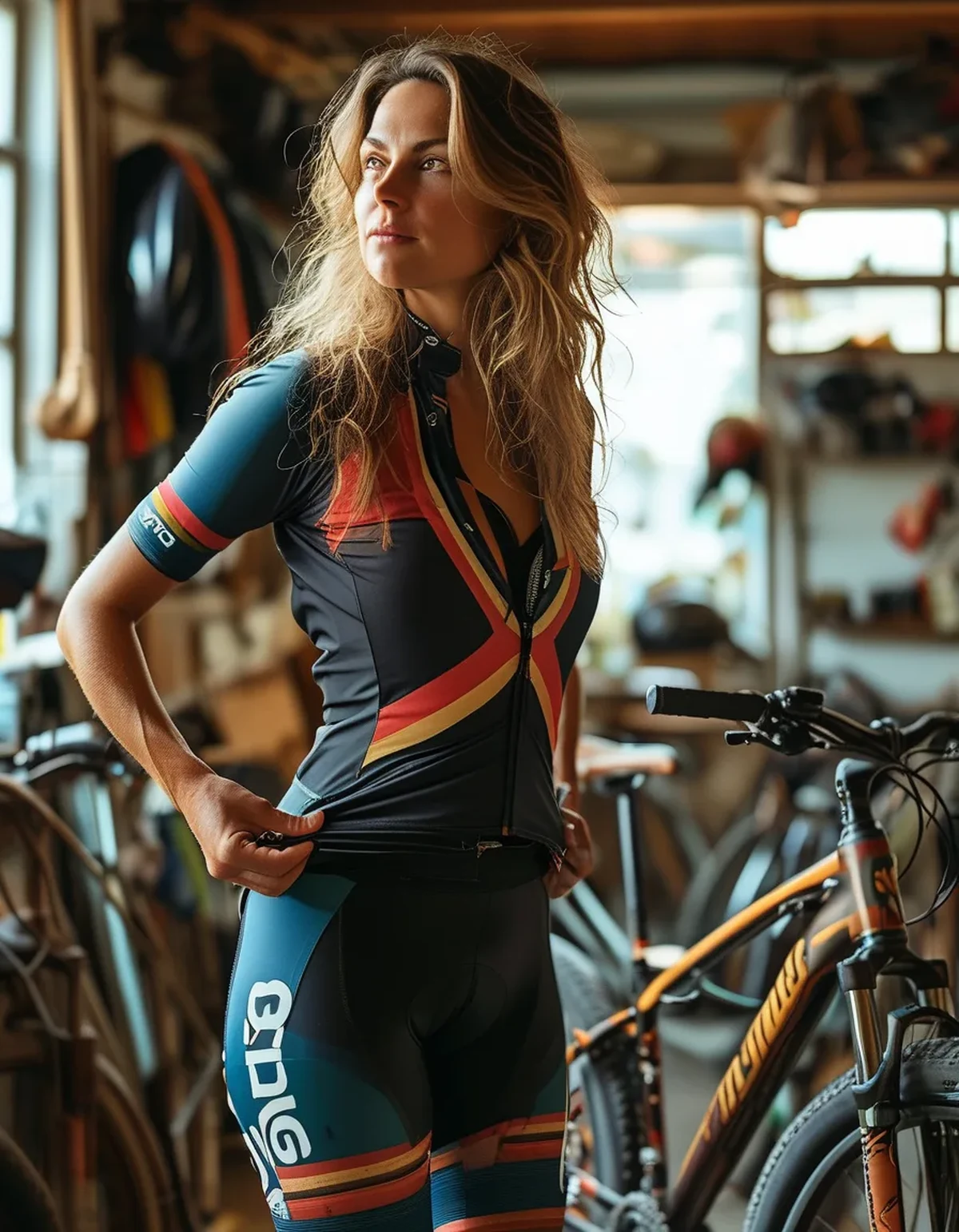
Race fit or club fit - which do you need?
Race fit is close to the body with minimal excess fabric. It is fastest, it does not flap, and it looks least flattering standing still. It also shows every underlying layer, which is a real consideration for some riders.
Club or endurance fit has more room through the chest and waist. It is more comfortable at social pace, easier to layer over, and far more forgiving if your riding position is more upright.
Choose by riding position, not by ambition. If you ride on the hoods or the tops with a relatively upright back, a club fit will sit better because it is cut for less torso extension. A deep race position genuinely needs a race cut to avoid excess fabric.
Sizing between brands is not comparable. Cycling kit sizing varies enormously, and continental European brands frequently run smaller than equivalent labelled sizes elsewhere. Always check the brand’s own measurements.
Consider what you layer underneath. A base layer adds a few millimetres everywhere, and a race fit sized without one becomes tight with one. This matters most as the seasons change.
And remember the fabric will relax over time. A jersey that is comfortably snug when new is usually right; one that is genuinely tight when new rarely improves enough to matter.
Myth vs Fact: Cycling Jersey Fit
Myth: A jersey that looks odd standing up is badly made. Fact: it is likely cut correctly for a riding position. The dropped hem, short front, and forward sleeves are all deliberate.
Myth: You should size up for comfort. Fact: excess fabric flaps, catches wind, and lets loaded pockets swing. A jersey slightly larger than needed is usually less comfortable on the bike, not more.
Myth: The rear pockets should be reachable easily standing up. Fact: pocket position is set for the bent riding position. Standing access is a side effect, not the design target.
Myth: Race fit is only for fast riders. Fact: it is for riders in a deep position. Speed and position correlate but are not the same thing.
Myth: All jerseys run the same size. Fact: cycling kit sizing varies widely between brands and regions. Measure yourself and use each brand’s chart rather than assuming your usual size.
Myth: A tight new jersey will stretch to fit. Fact: technical fabrics relax modestly, not dramatically. If it is genuinely tight in the shop, it will be tight on the bike.
FAQ: Cycling Jersey Fit, Answered
Why is my cycling jersey longer at the back?
Because bending forward on the bike lifts the rear hem. The extra length keeps your lower back covered when you are in a riding position, which is where it is designed to sit level.
Should I try a jersey on standing up?
Stand to check the basics, but always bend into a riding position with your arms reaching before deciding. That posture is what the garment was drafted for.
What is the difference between race fit and club fit?
Race fit is close-cut with minimal excess fabric for aerodynamics and a deep riding position. Club or endurance fit has more room through the chest and waist for comfort and layering at a more upright position.
Should I size up if I want to layer underneath?
Usually not by a whole size. A thin base layer adds a few millimetres, so choose a fit that is comfortably snug rather than tight, and consider whether you layer year-round before sizing around it.
TL;DR:
- Cycling jerseys are drafted for a forward-flexed riding position: longer back, shorter front, forward-set sleeves, curved hem.
- A jersey that looks correct standing in a mirror is usually cut like a casual top and will ride up at the back on the bike.
- Test fit by bending into a riding position with your arms reaching, and load the rear pockets before deciding.
- Race fit suits a deep position, club fit suits a more upright one - choose by how you actually ride, not by ambition.
- Sizing varies enormously between brands, and technical fabrics relax only modestly, so do not buy tight and hope.
The changing room mirror is the wrong test. Bend forward and reach - that is the shape the jersey was made for.
Keep Reading
This article is for general informational and styling purposes only. Fit, sizing, and product availability may vary.