How to Dress for a Ride That Starts at 55F and Ends at 80F
Quick Answer: Dress for about 10 degrees warmer than the start temperature and use removable extremity layers rather than a heavier core layer. The system that handles a 25-degree swing is a short-sleeve base plus arm warmers, knee warmers, a packable gilet and full-finger gloves - roughly 320 grams that all fits in two jersey pockets. Extremities are what actually feel cold, they are cheap to cover, and they come off one at a time so you can adjust in five stages rather than two. The mistake is a long-sleeve jersey, which is a single all-or-nothing decision you regret an hour in.
It is 6:45am in the last week of August and it is genuinely cold. Not autumn cold, but arm-hair cold, the sort where the first descent stings.
By 11am it will be 80 and you will be looking for shade.
That is a 25-degree swing inside one ride, and it is the hardest dressing problem of the whole cycling year - harder than winter, where you simply wear everything, and harder than July, where you wear almost nothing.
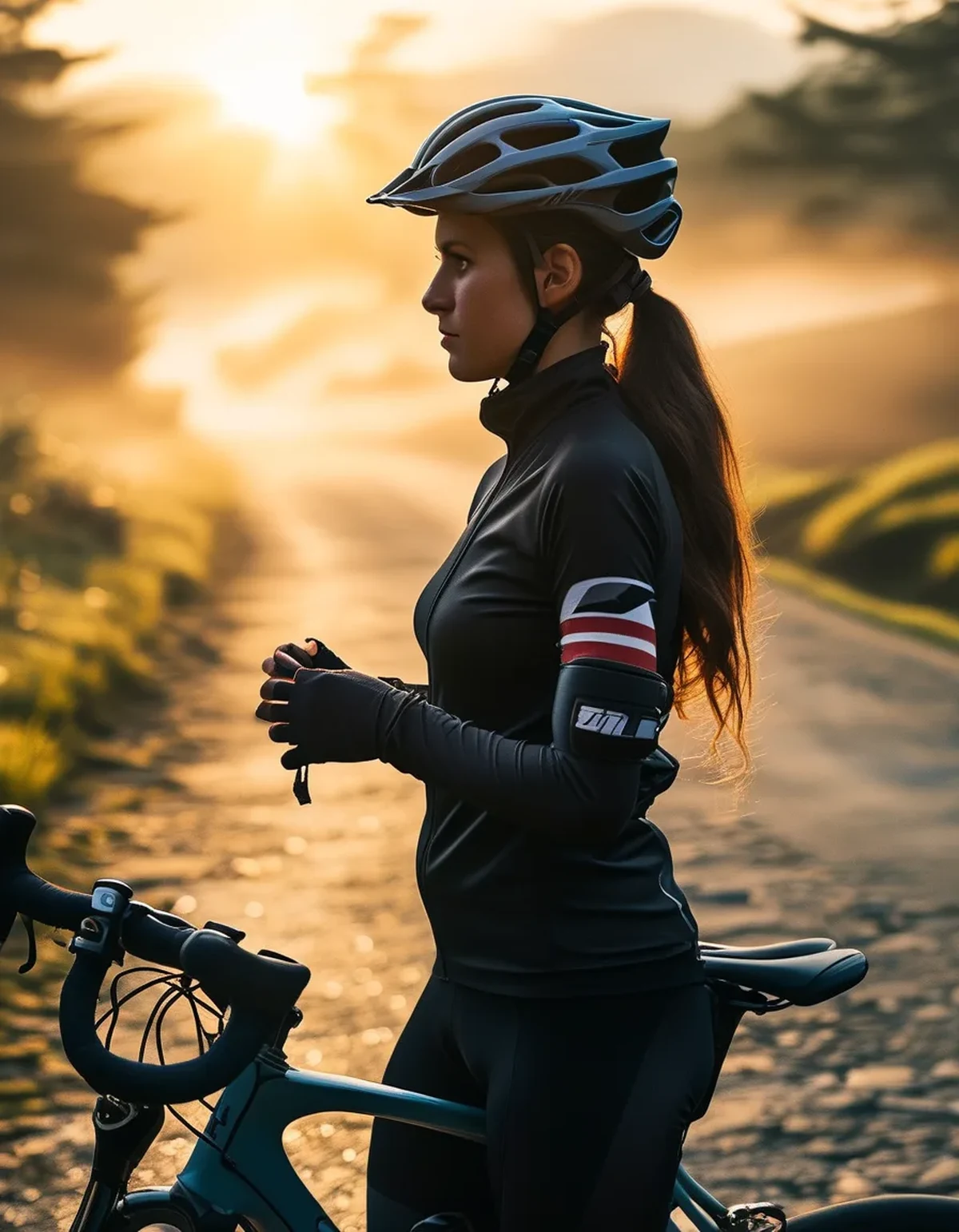
Why does the same temperature feel so different on a bike?
Because you are generating wind, and wind removes heat far faster than still air.
At a moderate 15 mph, apparent temperature is roughly 8 to 12 degrees below ambient. On a fast descent at 30 mph, more like 15 to 20 below. So 55F standing still is somewhere in the low 40s on your arms at speed - and that is before evaporative cooling from any sweat.
This creates the specific late-summer trap. You climb, generate heat, sweat a little. You crest, descend, and now you have wet fabric plus 30 mph of moving air. That descent is the coldest you will be all day, and it happens fifteen minutes after you were too warm.
Three things follow:
Dress for the middle of the ride, not the start. The standard rule is dress for about 10 degrees warmer than the current reading, because you generate heat within the first ten minutes. If you are comfortable in the driveway, you are overdressed.
Prioritise wind blocking over insulation. In this temperature band, a thin windproof front does more than a thick fleecy layer. Wind is the mechanism.
Manage sweat before the descent, not during it. Unzipping on the climb so you crest dry is worth more than any layer you can add at the top.
What actually goes in the kit?
The core system, roughly 320 grams total, fits in two jersey pockets:
Short-sleeve jersey and shorts. The base. Do not upgrade this to long sleeves - that is the mistake the whole system exists to avoid.
Arm warmers (~60g). The highest-value item on the list by a distance. They cover the limb with the most exposed surface area, they come on and off without stopping properly, and they roll to nothing. If you buy one thing, buy these.
Knee warmers (~90g). Less about comfort than about joints. Cold knees under load is a genuine issue, particularly on early climbs, and the general guidance among riders is to cover the knees below about 60F. They are also the layer that stays on longest, because your legs stay in the airflow.
Packable wind gilet (~90g). Windproof front, mesh or open back. This is the piece that makes descents survivable, and because the back is open it does not cook you on climbs. It packs to roughly the size of a banana.
Full-finger lightweight gloves (~40g). Hands are the first thing to genuinely hurt and the hardest to warm back up once they have gone. Cold hands also mean poor brake control on exactly the descents where you want good brake control.
Optional (~40g): a thin cap under the helmet, and a neck gaiter. Both are tiny and both punch above their weight on the first hour.
What deliberately is not on the list: a long-sleeve jersey (one irreversible decision), a full jacket (too warm above 60F and takes a whole pocket), and a base layer under the jersey (useful in true autumn, usually one layer too many in this window).
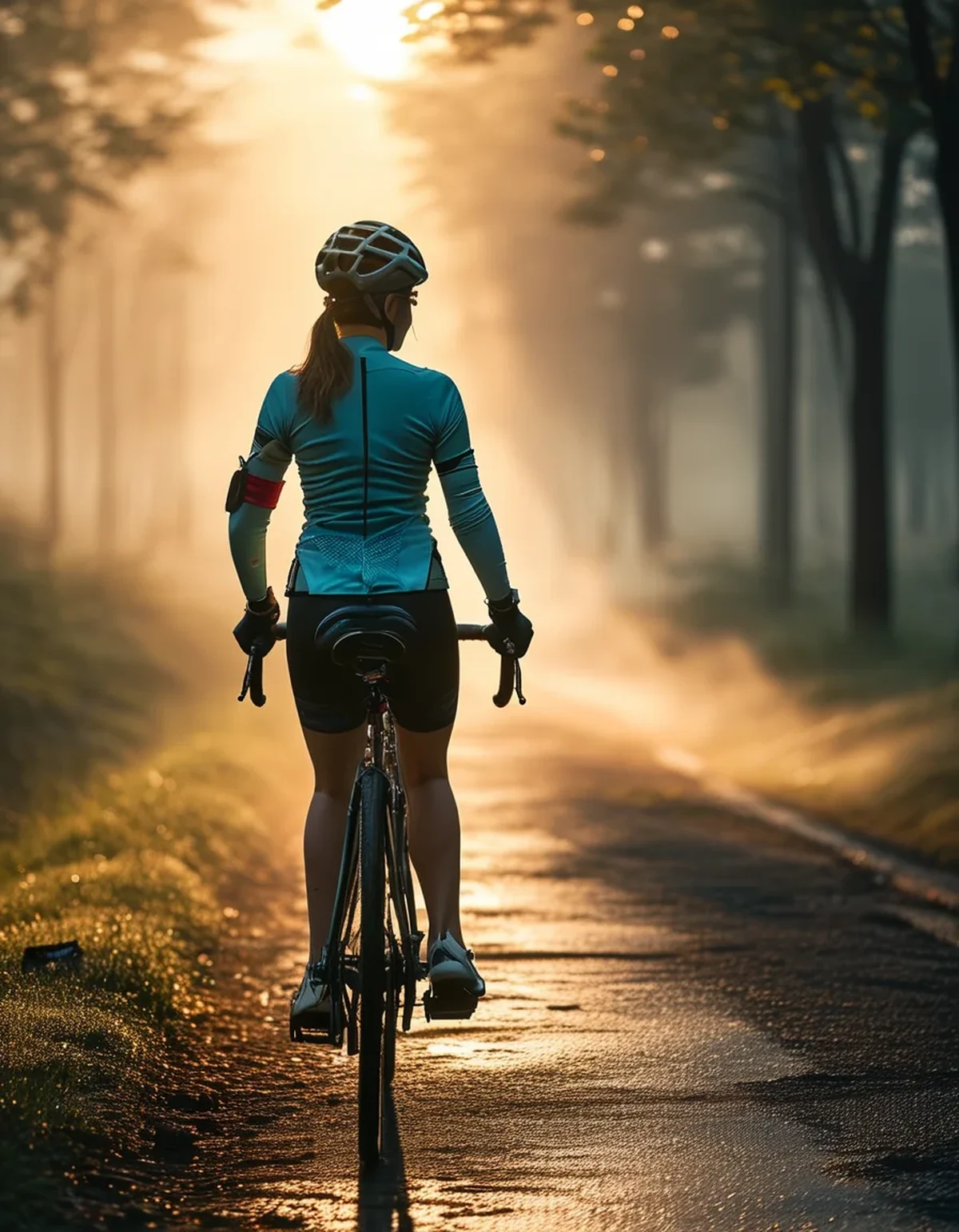
What is the actual order to take things off?
The value of this system is that it gives you five adjustment stages instead of two. Use them in order of heat generated rather than by feel, because feel lags behind reality by about ten minutes.
Stage 1 - after the first 15 minutes. Gilet unzipped or off, into a pocket. You are warm by now even if it does not feel like it, and staying zipped means starting to sweat, which costs you on the first descent.
Stage 2 - first sustained climb. Arm warmers down to the wrists, not off. Rolling them down takes three seconds and is fully reversible at the top, which is the entire point.
Stage 3 - top of the climb, before descending. Everything back on. This is the discipline that matters most and the one people skip because they are hot at the summit. You are not dressing for the summit, you are dressing for four minutes from now at 30 mph in sweaty kit.
Stage 4 - once ambient passes roughly 68F. Arm warmers off properly and into a pocket. Gloves off. Knee warmers usually stay - legs are lower, in more airflow, and knees stay cool longer than you expect.
Stage 5 - above 75F. Knee warmers off. You are now in summer kit and everything else is in your pockets, where it weighs about as much as a spare tube.
And the reverse rule for the way home if you are out past sunset: put layers back on before you feel cold, not after. Rewarming while riding is very slow, and in late August the temperature falls faster after 6pm than it did a month ago.
5 Mistakes Everyone Makes on Transition-Season Rides
1. Dressing for the driveway. You are stationary, you have not warmed up, and the reading in your hand is the coldest it will be all day. If you step outside comfortable, you are overdressed - and overdressed means sweat, and sweat means being cold later.
2. Wearing a long-sleeve jersey instead of arm warmers. It solves the first hour and ruins the next three. A long-sleeve jersey is a decision you cannot revisit without stopping and changing at the roadside. Arm warmers cost the same and can be adjusted at 20 mph.
3. Descending in what you climbed in. The single biggest cause of genuine cold on a transition ride. Thirty seconds at the top to zip up and pull the warmers back is worth more than any garment you own.
4. Ignoring the hands and the head. People buy expensive jerseys and ride with bare hands at 50F. Extremities have high surface area relative to mass, minimal insulation, and they are the parts that hurt. Forty grams of glove is the best value in the whole kit.
5. Carrying a jacket you never wear. A full jacket is dead weight above 60F and takes a whole pocket. The gilet does 80 percent of the job at a third of the bulk, and in this specific temperature window that is the right trade.
FAQ: Transition-Season Kit Questions, Answered
At what temperature should I put knee warmers on?
The common rule among riders is knees covered below about 60F, and it holds up well in practice - cold joints under repeated load is not something to push through, especially on a ride that starts with a climb. Knee warmers also tend to be the last thing you remove, since legs sit low in the airflow and stay cool after your torso is comfortably warm.
Do I need a base layer under my jersey in this weather?
Usually not in a 55 to 80F ride. A base layer helps most when you need moisture moved away and held off the skin for a long cold period, which is true in autumn and winter but adds unwanted insulation here. If you sweat heavily and the ride starts cold, a very lightweight mesh base can help with the first descent - but it is the first thing to cut if you are overheating.
How do I stop arm warmers sliding down?
Mostly a sizing problem: measure your bicep and buy accordingly rather than defaulting to your jersey size. Silicone gripper bands help, and pulling them right up under the jersey sleeve rather than butting them against it makes a real difference. If they still slide, they are a size too big.
General information. If you have Raynaud’s or another circulation condition, cold-weather riding needs a more individual approach - worth discussing with a healthcare professional.
TL;DR:
- Dress for 10 degrees warmer than the start. Comfortable in the driveway means overdressed on the bike.
- The kit: short sleeves plus arm warmers, knee warmers, a packable gilet and light full-finger gloves - about 320g, two pockets.
- Extremities over core. Wind chill at 20 mph is 10 degrees, on a descent closer to 20.
- Always re-layer at the top of a climb, before descending, even when you are hot.
- Skip the long-sleeve jersey and the full jacket. One is irreversible, the other is dead weight.
A 25-degree swing is not a harder version of a summer ride. It is two different rides stacked together, and the kit that works is the one you can change five times without stopping.
Keep Reading
This article is for general informational and styling purposes only. Fit, sizing, and product availability may vary.