Your Cycling Kit Works Differently Above 85°F — What to Change
Quick Answer: Above roughly 85°F, evaporation becomes your only meaningful cooling route, and a kit optimized for moderate temperatures actively works against it. Go lighter in weight but not necessarily in coverage, choose light colors, drop to a single thin base layer or none, prioritize a looser jersey fit over an aero one, and switch to a chamois cream that survives sweat dilution.
The jersey that felt like nothing in May turns into a wet sheet in August.
It is not that the kit got worse. It is that the cooling mechanism your body relies on changed, and most kit decisions were made for a different mechanism.
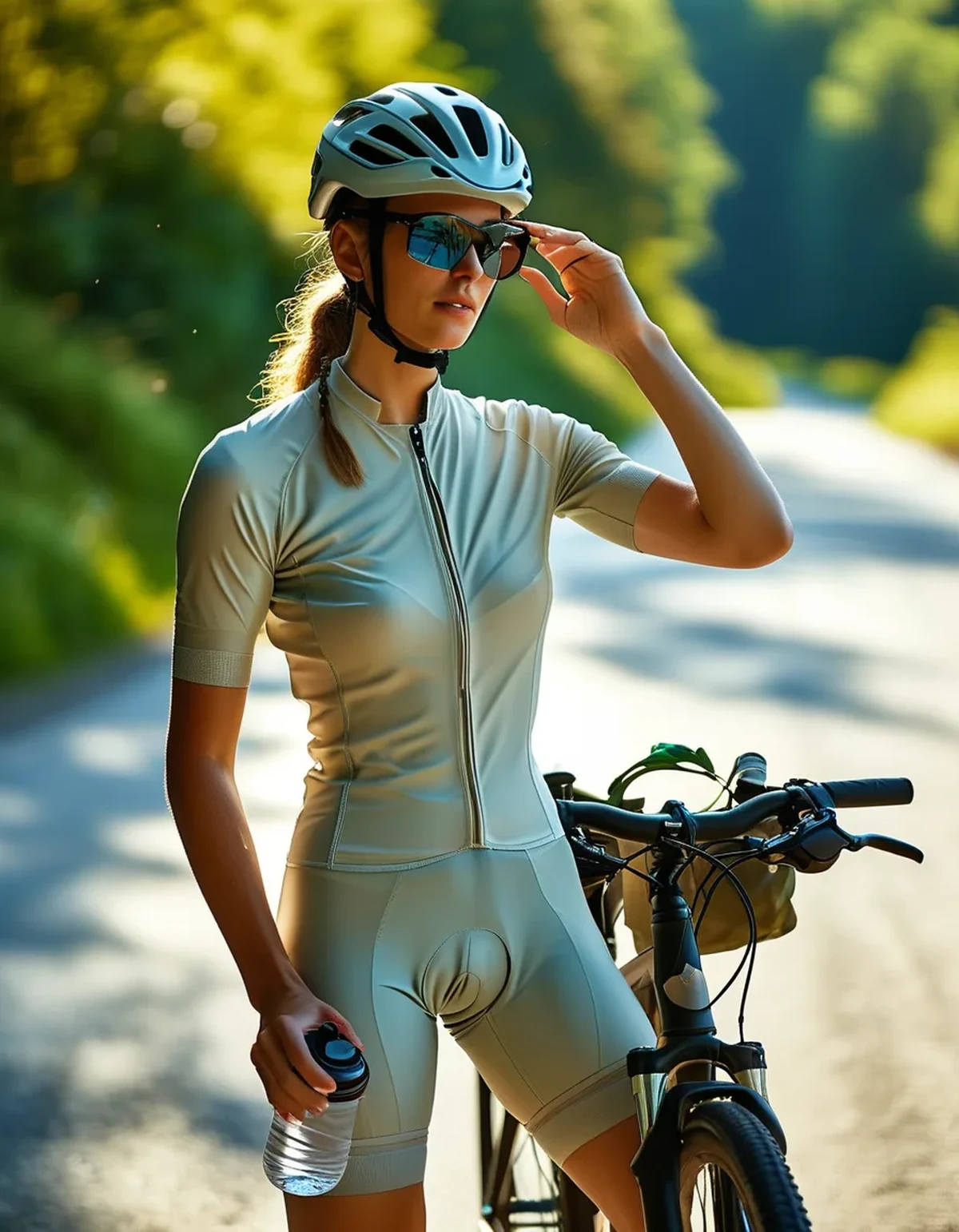
Why does hot-weather cycling kit follow different rules?
Below about 80°F, your body sheds heat through several routes at once — radiation from exposed skin, convection from moving air, and evaporation of sweat. Kit choices are forgiving because several mechanisms share the load.
Once ambient temperature approaches skin temperature, around 92°F, radiation and convection stop helping. You cannot dump heat into air that is already as warm as you are. Evaporation becomes essentially your only cooling route, and every kit decision should be judged on one question: does this help sweat evaporate, or does it trap it?
That reframe changes some intuitive answers.
Less fabric is not automatically better. A thin, light-colored long sleeve that wicks well can keep you cooler than bare skin in direct sun, because it blocks radiant heat load while still allowing evaporation. Pro riders in desert conditions wear more coverage, not less, for exactly this reason.
Tight is not automatically better. Aero fit compresses fabric against skin and reduces the air gap that evaporation needs. On a hot slow climb, a slightly looser jersey moves more air. On a fast flat, aero still wins because airspeed does the work.
Wet does not mean working. A jersey saturated to the point of dripping has stopped evaporating and started insulating. That is the signal to slow, add airflow, or dump water on yourself.
What are the five specific kit changes above 85°F?
1. Switch to your lightest-weight jersey, and prefer light colors. Jersey fabric weight matters more than any feature. Look for the thinnest mesh you own, particularly through the back and under the arms. Dark jerseys measurably absorb more radiant heat in direct sun — the difference is real on a treeless road at midday, even if it is small on a shaded route.
2. Drop the base layer, or go to the thinnest mesh one. A base layer helps in cool and variable conditions by moving sweat off the skin. In sustained heat it usually adds an insulating layer without adding evaporation. If you keep one, it should be an open mesh you can see light through — not a fine-knit wicking shirt.
3. Reconsider bib short leg length and gripper width. Wide silicone grippers get slippery and hot when saturated, and they trap heat at the thigh. Lighter summer bibs typically use a wider, lower-compression laser-cut hem instead. If your grippers are rolling in heat, that is a fabric saturation problem, not a sizing problem.
4. Change your chamois cream, not just the amount. Most creams are formulated to reduce friction, and many thin out and wash away under high sweat volume. On long hot rides, a thicker, water-resistant formulation stays put dramatically longer. Reapplying at a stop on a 4-hour hot ride is normal practice, not a sign something is wrong.
5. Add sun coverage on your arms rather than removing it. White or light-colored thin sun sleeves with a UPF rating cool most people on exposed midday routes. They are counterintuitive and they work — try them on a hot solo ride before deciding.
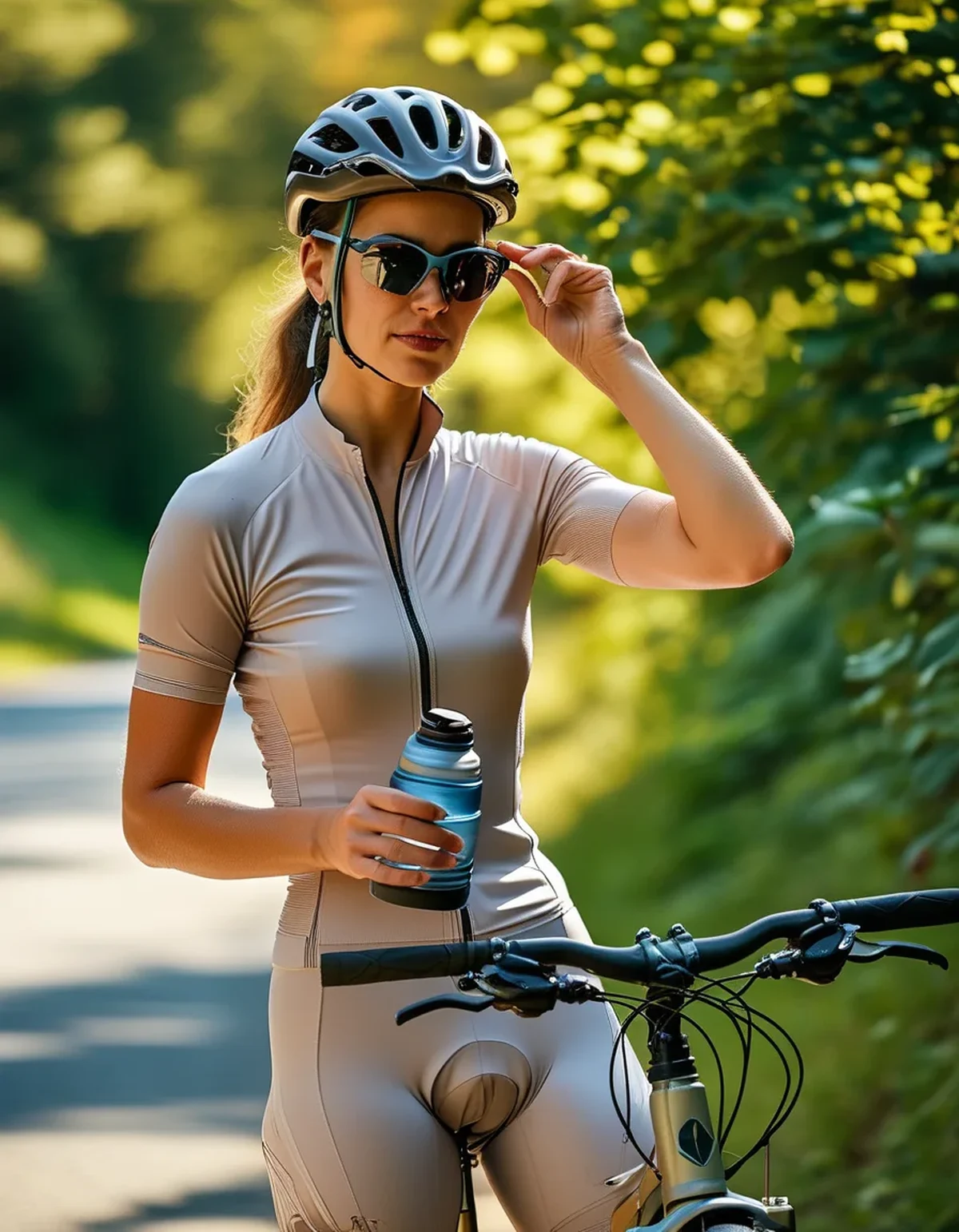
How do you manage the kit through a long hot ride?
Kit choice sets your starting point. Management is what gets you through hour three.
Pre-ride: start with the jersey unzipped and stay unzipped on climbs. The full-length zipper exists precisely for this. Wet your jersey before you leave if the ride starts in heat — you get twenty to thirty minutes of enhanced evaporative cooling for free.
At stops: the highest-value move is pouring water on the back of your neck, wrists, and inner forearms rather than over your head. Those are high blood-flow areas close to the surface. A soaked jersey is second best; a soaked head does the least.
When the jersey is fully saturated: it has stopped cooling. Unzip fully, increase airflow, and if you are on a slow climb with no wind, consider a brief stop in shade. Continuing to grind in a saturated kit in still air is where heat problems start.
Salt management matters more than most riders think. Heavy sweaters can lose a striking amount of sodium per hour, and white crusting on your kit after a ride is the visible evidence. If you finish hot rides with headaches, cramps, or a stomach that will not accept water, sodium is a more likely culprit than total fluid volume.
Post-ride, rinse the kit immediately. Salt crystals are abrasive and they degrade elastane faster than anything else you do to your kit. A cold water rinse within an hour of a hot ride meaningfully extends the life of expensive bibs. Never leave a salt-soaked kit balled up in a bag overnight.
5 Mistakes Riders Make in Their First Real Heat
Mistake 1: Wearing the same bibs used in spring and blaming the chamois. A chamois that felt fine at 65°F can cause problems at 95°F because sweat volume changes friction, swelling, and skin pH. If saddle discomfort appeared suddenly with the heat, look at cream and moisture management before you shop for a new saddle.
Mistake 2: Going sleeveless. Sleeveless jerseys give up sun protection and shoulder coverage for almost no cooling benefit, since the shoulders are exactly where radiant load is highest. They also leave a hard tan line that most riders regret. Standard short sleeves outperform them in real heat.
Mistake 3: Treating dark kit as neutral. A black jersey on a shaded forest ride is fine. The same jersey on an exposed midday road absorbs noticeably more radiant heat. It is a small effect that compounds over hours.
Mistake 4: Skipping the base layer decision entirely. Many riders either always wear one or never do. It should be a per-ride call based on temperature and humidity — mesh in dry heat, nothing in humid heat, thin merino in variable conditions.
Mistake 5: Under-dressing for the descent. A 95°F valley can become a 70°F descent with a wet kit and 30 mph of wind chill, which is genuinely cold. A packable vest weighs almost nothing and lives in a jersey pocket. This is the mistake that turns a great hot ride into a miserable last hour.
FAQ: Hot Weather Cycling Kit, Answered
Are white jerseys really cooler than black ones?
In direct sun, yes — light colors reflect more radiant energy. The effect is modest and gets swamped by fabric weight and fit, so choose your lightest jersey first and treat color as a tiebreaker.
Do cooling vests or ice socks work for amateur riders?
Pre-cooling before a hot ride has decent support, and an ice sock in the back of a jersey provides real, if brief, relief. Both are more useful for events than for daily riding, mainly because of the logistics of keeping ice cold.
How often should I wash a hot-weather kit?
Every ride, without exception. Salt and bacteria concentrate far faster in heat, and both chamois hygiene and fabric life depend on it. Rinse immediately, wash cold, never use fabric softener, and line dry.
When is it too hot to ride?
There is no single number, because humidity, sun exposure, and acclimatization all shift it. Better signals: you stop sweating, you get chills in the heat, you feel confused or unusually irritable, or your heart rate is far above normal for your pace. Any of those means stop and cool down immediately, not push through. This is general information, not medical advice.
TL;DR: Above 85°F, evaporation is your only real cooling route, and kit should be judged on whether it helps or blocks it.
- Lightest fabric weight beats least coverage. Thin, light-colored sun sleeves often cool you more than bare arms in direct sun.
- Drop the base layer or go to open mesh. A fine-knit wicking layer just insulates in sustained heat.
- Switch to a thicker, water-resistant chamois cream and reapply on rides over about three hours.
- Slightly looser fit outperforms aero fit on slow hot climbs, where airspeed is not doing the work for you.
- Pour water on your neck and wrists, not your head, and treat a fully saturated jersey as a signal to add airflow.
- Rinse salt out of your kit within the hour — it is the fastest way to destroy elastane.
- Pack a vest for the descent. Wet kit plus 30 mph is cold even on a 95°F day.
Make the base layer and chamois cream changes first. Those two fix most hot-ride complaints.
Keep Reading
This article is for general informational and styling purposes only. Fit, sizing, and product availability may vary.