How Long Is the Chamois Break-In Period, Actually?
Quick Answer: Most chamois padding needs 3-5 rides to break in and mold to your body — the stiffness and awkward pressure points in ride one or two are normal, not a sign of the wrong size or a bad product. Proper washing (not high heat drying, which can degrade foam) actually speeds the process rather than slowing it.
Your new cycling shorts felt great in the store and strange on the bike — pressure in odd spots, a stiffness that a broken-in pair doesn’t have. That’s the expected break-in period, not a fit failure.

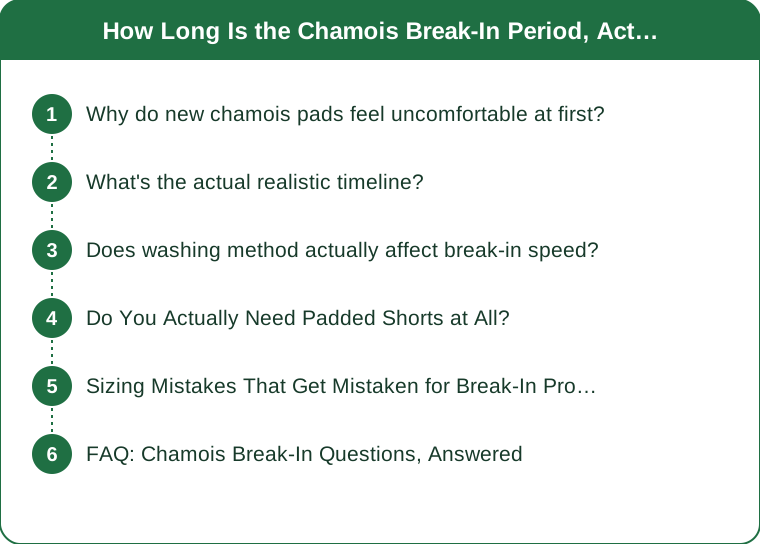
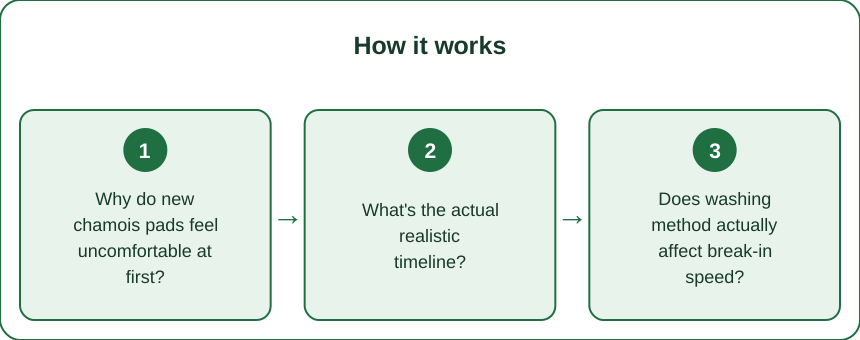
Why do new chamois pads feel uncomfortable at first?
New foam padding is denser and less molded than it will be after several rides — your body hasn’t yet compressed the foam into its personal shape, so pressure distributes less evenly early on. This is a foam property, not a defect, and it resolves with normal use.
What’s the actual realistic timeline?
3-5 rides of at least 30-45 minutes each is the typical window for a chamois to noticeably soften and mold. Some higher-density performance pads can take slightly longer (up to 7-8 rides), while softer entry-level padding often breaks in faster.
Does washing method actually affect break-in speed?
Yes — washing in cold water and air drying (never high-heat tumble drying) helps the foam soften naturally over successive washes without degrading its structure. High heat can actually damage foam density unevenly, which sometimes creates new pressure points instead of smoothing out old ones.

Do You Actually Need Padded Shorts at All?
For rides under 20-30 minutes on an upright bike, some riders skip padding without issue. For longer or more frequent rides, a chamois meaningfully reduces pressure-related discomfort — the break-in period is worth it for anyone riding regularly rather than occasionally.
Sizing Mistakes That Get Mistaken for Break-In Problems
Not all discomfort is break-in related — a chamois that’s genuinely too small will show persistent seam pressure that doesn’t improve after 5+ rides, while a properly sized pad that’s still stiff shows steady, ride-over-ride improvement. If nothing’s improved by ride 6 or 7, check sizing before assuming more break-in time will fix it.
FAQ: Chamois Break-In Questions, Answered
Is it normal for new cycling shorts to feel tight at first?
Yes — chamois foam and the surrounding fabric both soften with wear and washing; tightness alone in the first few rides isn’t necessarily a sizing problem.
Can I speed up the break-in process artificially?
Gentle hand-flexing of the pad before wearing and consistent cold-wash, air-dry cycles are the main things that help — there’s no reliable shortcut beyond normal use and proper care.
How do I know if it’s a sizing issue instead of a break-in issue?
Track whether discomfort location and intensity improve ride over ride — genuine break-in shows steady improvement, while a sizing issue tends to stay flat or worsen.
TL;DR:
- 3-5 rides is the typical chamois break-in window — early stiffness is normal, not a defect
- Cold wash and air dry speeds softening; high heat can damage foam density
- Padding matters more for longer or more frequent rides than short casual ones
- No improvement by ride 6-7 points to a sizing issue, not a break-in issue
Give new shorts their fair few rides before judging the fit — most discomfort resolves on its own within that window.
Keep Reading
This article is for general informational and styling purposes only. Fit, sizing, and product availability may vary.