Saddle or Shorts? How to Tell Which One Is Actually Hurting You
Quick Answer: Where it hurts tells you what to change. Sit bone pain usually means the saddle is the wrong width or the tilt is off. Soft tissue pressure and numbness usually means saddle shape or nose angle. Chafing and hot spots at the seams usually means the shorts. Pain that appears only after an hour and is symmetrical usually means the chamois; pain on one side only usually means bike fit.
Everybody’s first move is to buy different shorts. Sometimes that is right. Often it is an expensive way to not fix a saddle problem.
The location and the timing of the pain narrow it down before you spend anything.

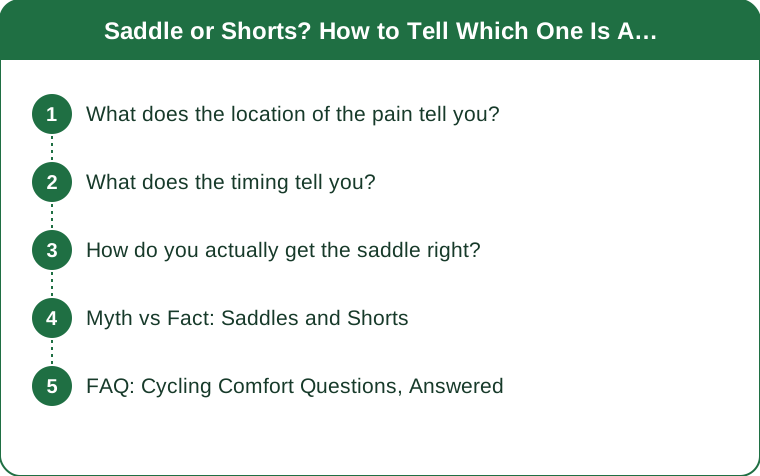
What does the location of the pain tell you?
This is the fastest diagnostic available, and it costs nothing.
Pain at the sit bones - the two bony points you can feel when sitting on a hard chair. This is nearly always a saddle issue. Either the saddle is too narrow, so the sit bones sit on the edges rather than the supported platform, or too wide, or the tilt is putting weight in the wrong place. Shorts cannot fix a saddle that does not support your sit bones - the chamois padding is a few millimetres and the mismatch is centimetres.
Pressure or numbness in the soft tissue at the front. This is a saddle shape and angle problem. Numbness indicates compression of nerves and blood vessels and should be taken seriously - it is the one symptom worth acting on immediately rather than adapting to. A cutout or channel saddle, a flatter nose, and a slight nose-down tilt are the standard fixes.
Burning or rawness at the inner thigh where it meets the saddle. This is friction, and it is usually shorts - a seam in the wrong place, a chamois edge that is too thick, or fabric that has lost its smoothness. It can also be a saddle that is too wide at the nose, so check both.
Chafing along a line that matches a seam. Shorts, unambiguously. A seam running through a contact area is the cause.
Aching in one side only. Usually bike fit rather than either component - leg length difference, a saddle that is not straight, or a cleat position issue. Asymmetrical pain from a symmetrical component is unlikely.
General soreness everywhere after a long ride when you are not used to long rides. Often neither - it is adaptation, and it improves with consistency.
What does the timing tell you?
The second free diagnostic, and it separates saddle from shorts well.
Pain from the first ten minutes. Saddle. A shorts problem needs friction to develop; a saddle problem is a pressure mismatch that exists as soon as you sit down. If it hurts immediately, the chamois is not the variable.
Pain appearing after 45-90 minutes. Could be either, and the character distinguishes them. Building pressure and numbness point to saddle. Burning, stinging, or a raw sensation points to shorts and moisture.
Pain only on long rides, over two hours. Usually chamois quality or moisture management, sometimes saddle padding density. A chamois adequate for an hour can be inadequate for three - density and thickness are designed around ride duration, and this is what distinguishes cheap shorts from expensive ones more than anything else.
Pain that appeared suddenly after months of comfort. Something changed. Work through the list: new shorts, worn-out shorts, a saddle that slipped, a new bike position, a change in riding volume, or a change in the roads you ride. Chamois padding compresses over time, and shorts have a functional lifespan of a few hundred hours regardless of how they look.
Pain that is worse in hot weather. Moisture is the variable. Heat and sweat soften skin and dramatically increase friction damage - this is why late summer is peak chafing season. The same shorts and saddle that were fine in April can be a problem in August, and the fix is chamois cream and better-wicking fabric rather than new equipment.
A useful combined rule: immediate and positional means saddle. Gradual and frictional means shorts.

How do you actually get the saddle right?
In order, and most of it is free.
1. Measure your sit bone width. This is the single most useful measurement in cycling comfort and most people have never done it. Many bike shops have a measuring pad. The DIY version: sit on a piece of corrugated cardboard on a hard surface, lean forward slightly to mimic riding posture, stand up and measure between the two impressions.
Saddle width should generally be your sit bone width plus roughly 20-30mm, though this varies with riding position - a more aggressive forward position rotates the pelvis and needs a narrower saddle.
2. Check the saddle is level. Put a spirit level or a phone level across it. Most riders are best somewhere close to level, with small nose-down adjustments of one to two degrees relieving soft tissue pressure. Excessive nose-down slides you forward and transfers load to your hands and arms.
3. Check saddle height. A saddle too high causes rocking side to side, which produces friction and asymmetrical sit bone pain. If you rock visibly, height is the issue and no saddle will fix it.
4. Check fore-aft position. Affects how weight distributes between sit bones and soft tissue. Small adjustments here can resolve front-end pressure without changing the saddle at all.
5. Only then consider a different saddle. A cutout or channel is worth trying if you have soft tissue pressure. Many shops offer demo programmes - borrowing before buying is standard practice in this category and worth asking about.
The most common expensive mistake: buying a heavily padded saddle to fix sit bone pain. Very soft padding lets the sit bones sink through until they compress soft tissue at the sides - which produces a different and often worse problem. Firmer and correctly sized beats softer.
Myth vs Fact: Saddles and Shorts
Myth: A more padded saddle is more comfortable. Fact: Excessive padding lets sit bones sink through and loads the soft tissue around them. Correct width with firm support distributes weight properly, and is what long-distance riders overwhelmingly use.
Myth: Expensive shorts are just a brand markup. Fact: Chamois density, multi-density construction, seam placement and antibacterial treatment differ substantially with price, and the differences show up specifically on rides over about two hours. For short rides, cheap shorts are often fine.
Myth: You should wear underwear under cycling shorts. Fact: The chamois is designed against skin. Underwear adds seams and holds moisture - the two things that cause chafing. This is one of the clearest recommendations in cycling.
Myth: Discomfort is normal and you toughen up. Fact: Some adaptation is real for new riders over the first few weeks. Numbness is never in that category - it indicates nerve or vascular compression and warrants a position change rather than persistence.
Myth: Women’s saddles are a marketing category. Fact: Average sit bone width does differ between populations, and many women’s saddles are wider with larger cutouts. The important part is the measurement rather than the label - plenty of people are best served by a saddle marketed to the other category.
Myth: Chamois cream is only for very long rides. Fact: It reduces friction from the first minute, and it is most valuable in hot humid conditions where skin is softened by moisture. A late summer commute can benefit as much as a century ride.
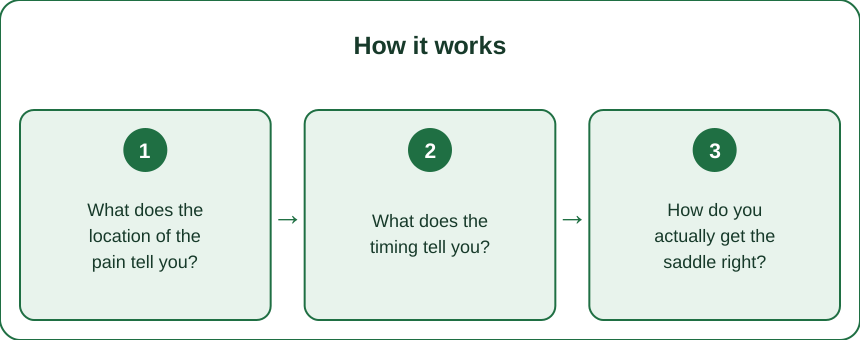
FAQ: Cycling Comfort Questions, Answered
How long should new shorts take to feel right?
They should feel acceptable immediately - there is no meaningful break-in period for a chamois. Saddles are different: a new saddle usually needs three to five rides before you can judge it, because you are also adapting to a different pressure distribution.
When should I replace cycling shorts?
When the chamois has visibly compressed, when the fabric has gone thin or the elastic has loosened at the legs, or after a few hundred hours regardless of appearance. Compressed padding is the failure mode that arrives before anything looks worn out.
Is numbness something to worry about?
Yes - treat it as an immediate signal rather than something to push through. It indicates compression of nerves or blood vessels. Stop, stand on the pedals, and change the saddle angle or model before the next ride.
Do I need a women’s specific saddle?
You need a saddle that matches your sit bone width and riding position. That is more often found in the women’s range for wider sit bones, and plenty of riders are better served outside the category they would expect. Measure first.
Why is it suddenly worse in hot weather?
Moisture softens skin and increases friction dramatically, and sweat concentrates salt in the chamois. Chamois cream, well-wicking shorts and changing out of them promptly after riding handle most of it.
Should I use chamois cream every ride?
It is worth it on anything over about an hour, and in hot humid conditions on shorter rides too. It reduces friction from the start rather than only helping once problems appear.
TL;DR:
- Sit bone pain means saddle width or tilt; soft tissue pressure means saddle shape; seam-line chafing means shorts
- Immediate pain points to saddle, gradual friction pain points to shorts
- Measure your sit bones - the cardboard method takes five minutes and is the most useful number in cycling comfort
- Softer saddles often make sit bone pain worse by letting the bones sink through
- Numbness is not something to adapt to; it is a position change signal
- Hot humid weather makes existing setups worse through moisture, not because anything broke
Work out which component it is before you buy the other one.
Keep Reading
This article is for general informational and styling purposes only. Fit, sizing, and product availability may vary.